
The chateau, surrounded by an extensive park, is the jewel of the town of Strážnice. However, it acquired its current neo-Renaissance appearance with classical elements only in the mid-19th century.
In the areas open to the public, visitors can view the historical library, which contains 13,000 volumes of books. The permanent exhibition “Folk Music Instruments in the Czech Republic“, the only one of its kind in Central Europe. Other interiors in the castle are also being gradually restored, with the castle chapel featuring a historically valuable altar being the most recently opened to the public. Visitors will surely be interested in the annually changing exhibitions in the castle gallery.
The spaces of the pink, green, and yellow salons are used for concerts and other cultural programs.
Let yourself be carried away and enchanted by the beauty of folk costume, whose unusual colors and composition of shapes are so different from contemporary clothing. The exhibition will pleasantly attune you and lead you to reflect on the skill and aesthetic sense of our ancestors, thanks to which they created their clothing.
The exhibition “Folk Costume in Moravia” was ceremonially opened during the 70th edition of the Strážnice International Folklore Festival in 2015. It is one of the outputs of the Program of Applied Research and Development of National and Cultural Identity (NAKI).
You can view a separate presentation at http://vystava.lidovyodev.cz/
Virtual Tour
Moravia, thanks to its exceptional location, is an intersection where influences from several distinct areas with unique clothing cultures converge. In the east, bordering the Carpathian mountains, clothing elements associated with pastoral culture are prevalent, with elements extending to Wallachia and Moravian Kopanice. In contrast, the south and southeast, Podluží and Strážnicko, have a close relationship with the flat western Slovakia and Pannonia. In Haná, located in the core of the Moravian lowlands, some elements of domestic clothing constructions have been preserved, with histories dating back to the Middle Ages. Unlike these, northern, western, and partly central and southern Moravia bear traces of Western European stylistic clothing, whose urban variants penetrated into villages from the end of the 18th century. The western type of folk costume historically extended to northern Kyjovsko and remains in use in Vracov. Some of its elements, such as women’s and men’s vests and jackets, also spread further east into neighboring areas, gradually changing the established form of folk dress. The result of such influence and intermingling is an extraordinary diversity in folk costumes, which in Slovácko manifests in unusually sharp boundaries between costume districts, often differing from village to village. Differences are evident in colors, materials used, composition of clothing components, and their construction, with elements of various ages coexisting in a single ensemble.
Given the diversity of clothing material, we have divided the entire exhibition into three exhibition halls, each presenting not only a specific geographical part of Moravia but also specific situations and types of costumes people wore. The entrance hall is conceived as a tribute to Slovácko, the area where folk costume remained in use the longest and is represented by the largest number of costume types. The displayed ensembles represent ceremonial and festive costumes worn by wedding participants, whether it was the groom and bride, wedding parents, groomsmen and bridesmaids, or regular wedding guests. The second part of the exhibition is conceived as a fair, where people from near and far always gathered, resulting in a colorful mix of costumes and dialects. In our case, inhabitants from southern, western, and central Moravia, starting from Hanácké Slovácko, through Horácko to Brněnsko and Malá Haná, set out for Brno. Costumes of national minorities who lived in Moravia are also presented, whether it’s Croats in the Mikulov region or German-speaking inhabitants of Jihlava, Hřebečsko, and Vyškov regions. The last part of the exhibition presents pious pilgrims from Haná and Wallachia, who met in Velehrad on the occasion of the Cyril and Methodius jubilee.
The challenging task of presenting folk dress in the form of fully dressed figures was undertaken by the exhibition architect Emil Zavadil. Exhibition mannequins were chosen for the installation, with bodies made of wire skeletons wrapped in soft foam material. This allowed the mannequins to be given specific postures, gestures, and expressions, further enhanced by facial expressions. The architect’s goal was to give the figures a hint of inner life, which can only be expressed by facial expressions. Young sculptor Irena Armutidisová therefore created several types of faces representing men and women in young, middle, and late age. Thanks to the use of several different shades of skin color and the play of light and shadow on the mannequin’s face, we have the impression that each face is unique. The overall concept of the exhibition is intentionally minimalist, emphasizing the object of installation itself – the folk costume – yet the exhibition doesn’t feel empty or static. This is due to details that appear so natural that we often only register them after a certain delay.
We wish all visitors to the exhibition to be carried away and enchanted by the beauty of folk costume, whose unusual colors and composition of shapes are so different from contemporary clothing. We would like the exhibition to put you in a pleasant mood and inspire reflection on the skill and aesthetic sense of our ancestors, thanks to which they created their clothing. We hope that you will gain new knowledge here and enjoy the installation of folk costumes and accessories that have been stored in depositories for years and are now presented to you in all their beauty.
PhDr. Martin Šimša, Ph.D., exhibition author
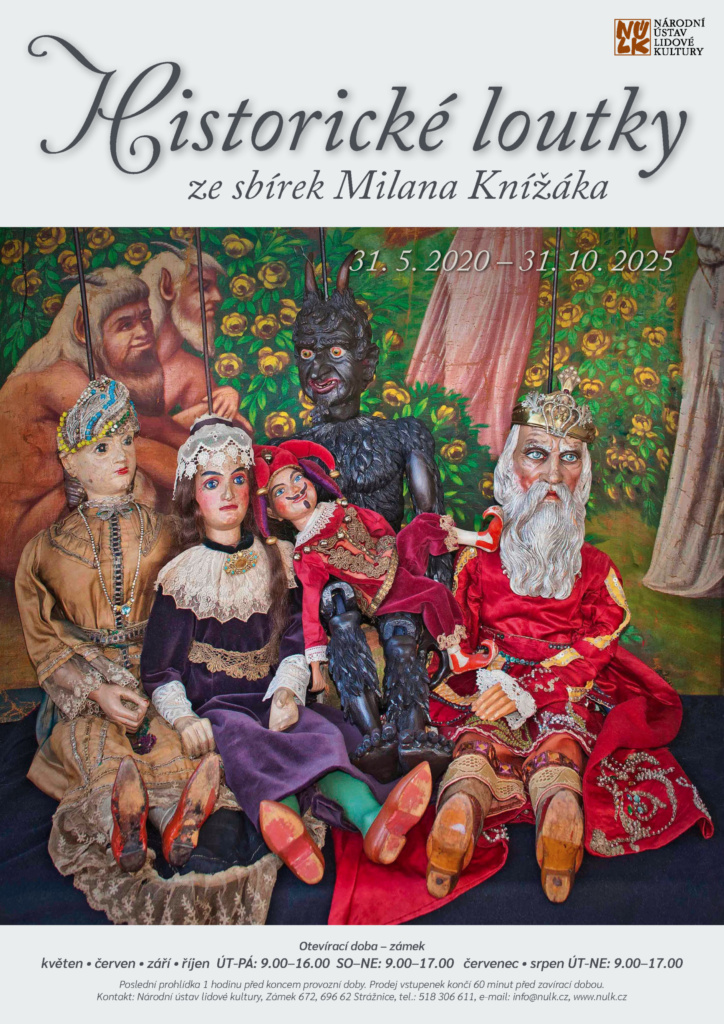
The beginnings of folk puppetry in our country date back to the second half of the 18th century. At that time, traveling puppeteers belonged to the lowest social classes and were more tolerated by the authorities than supported. The number of puppeteers gradually increased throughout the 19th century, with the most significant growth occurring during the National Revival period, when puppet theater played a unique role as the only form of Czech theater in rural areas. The stage for puppet performances was often the open side of a wagon or an improvised scene in village inns or even in the open air. The stage decorations were painted on canvas and typically designed for specific settings. The curtain was either plain or depicted a popular scene from Czech history, a mythological, or a biblical motif.
Puppets were among the most valuable possessions of a puppeteer’s family, handed down, carefully maintained, and expanded. The vast majority of Czech historical puppets were wooden marionettes on wire with additional controlling strings. Only a few, mostly comedic or variety puppets, such as Kašpárek (also known as Pimprl, Pimprdle), were suspended solely on strings for greater mobility. During the Baroque period, which in puppet theater survived in some areas until the 20th century, puppets were understood as miniature versions of live actors. Their heads were intricately carved, while their bodies were kept simple for practicality, given frequent relocations. The puppets maintained human proportions whenever possible and imitated realistic figures, albeit with some stylization. The costumes and props were usually very meticulously crafted.
The puppet carvers were simple craftsmen, but they mastered their trade perfectly. Many of them were also sculptors of saint statues, a common craft during the Baroque era, which contributed to the high artistic quality of their work. Puppets created in such workshops cannot be called folk puppets as is commonly done. These should be referred to as artisan puppets, though during the 18th and most of the 19th centuries, no other types of puppets existed in our country. Professional artists-sculptors began engaging with puppet theater much later, with a few exceptions.
In the 19th century, the demand for puppets grew, making them a relatively common commodity in carving workshops. The most prominent of these workshops during this period were those of M. Sichrovský, A. Sucharda Sr. and A. Sucharda Jr., F. Nosek and K. Nosek, J. Alessi, J. Chochol, A. and J. Adámek, V. Šedivý, among others.
In addition to artisan puppets, there were also genuinely folk puppets — made by individuals who were not trained carvers and crafted them either for their own amusement or because they could not afford to buy them from professional carvers. Puppeteers themselves often carved some types of puppets, especially those used infrequently. This probably led to the myths about folk puppeteers being sovereign puppet carvers. Undoubtedly, some puppeteers were artistically gifted and created many of their own puppets, though the number was not significant. The legends of folk puppeteers carving hundreds of puppets have no real basis.
The late 19th and early 20th centuries brought great diversity to the concept of puppet theater and puppet-making. Social and cultural conditions caused puppet theater to evolve. On the one hand, traditional traveling puppeteers clung to their established repertoire, making almost no changes to their puppets. On the other hand, home family theaters and community theaters began to emerge, featuring a different format where fairy tales became the primary theatrical form. These developments influenced the transformation and creation of new puppet types. Home family puppet theaters took the form of both industrially and amateur-produced tabletop puppet theaters and puppets, with notable examples being the Alšovy Puppets and Decorations by Czech Artists from 1912 and 1913. In the first half of the 20th century, major productions of puppets, decorations, and theaters were supplied by companies such as A. Münzberg, Modrý & Žanda, JEKA, the Válka Brothers Factory, TOFA, n.p., J. Blanka Factory, and APAS.
The period leading up to World War II was marked by high-quality amateur puppetry, but the development gradually led to the formation of professional Czech puppet theater and the modernization of puppetry in the second half of the 20th century.
Puppet theater remains an essential part of our puppetry tradition, and as a significant element of the intangible cultural heritage of the Czech Republic, it was inscribed on the UNESCO Representative List of the Intangible Cultural Heritage of Humanity in 2016.
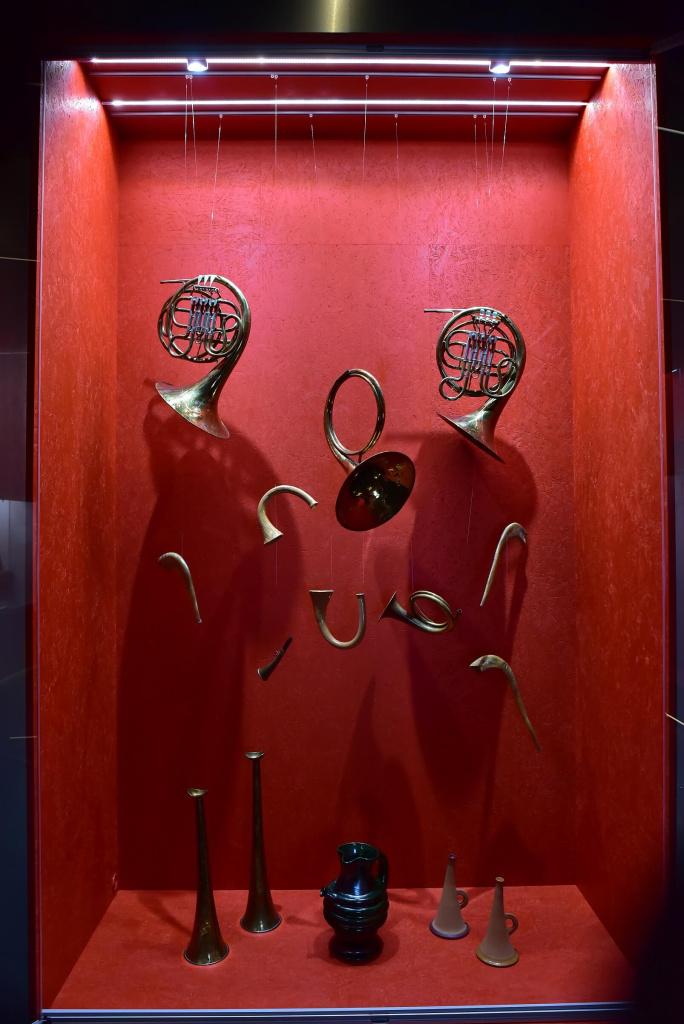
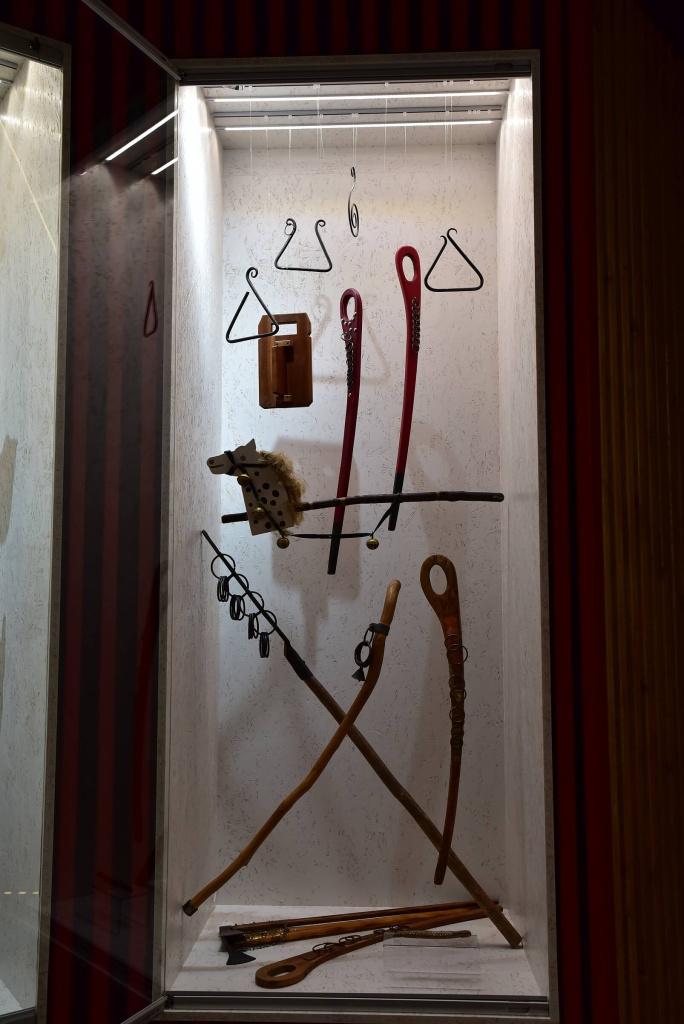
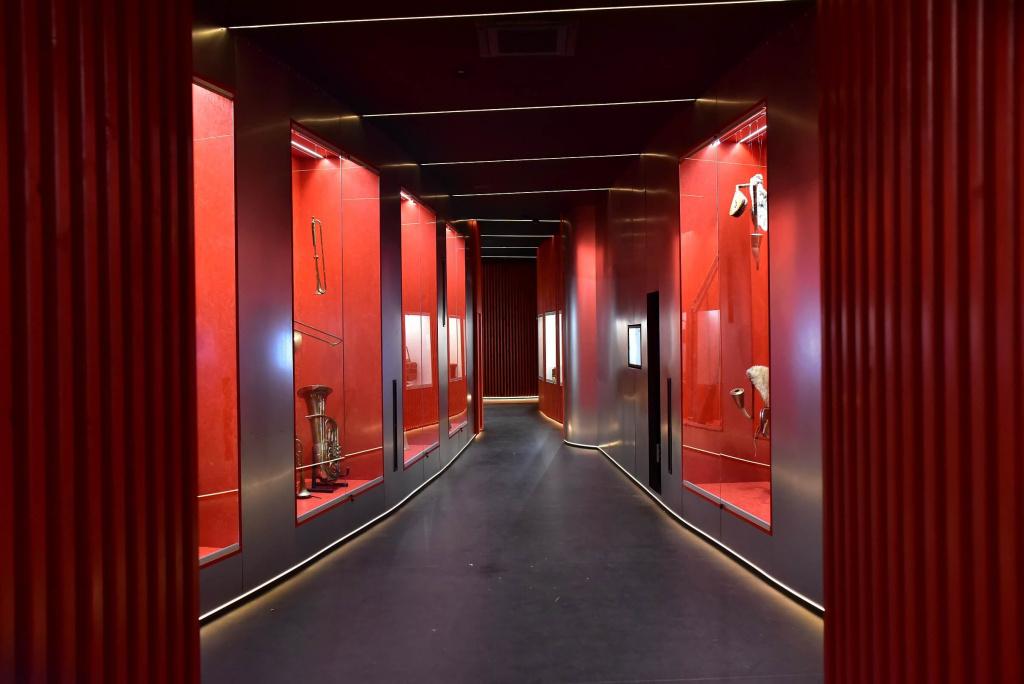
Come take a walk with us through the body of musical instruments and listen to the sounds of music. A musical instrument is a peculiar thing. At first, a person is drawn to its wonderfully beautiful shape and distinctive material. As they approach it, they can even sense its smell. When they hold it, they feel its lightness or weight and perceive its warmth or coldness. The instrument becomes increasingly irresistible, and we long to hear the sounds and tones this mysterious object produces.
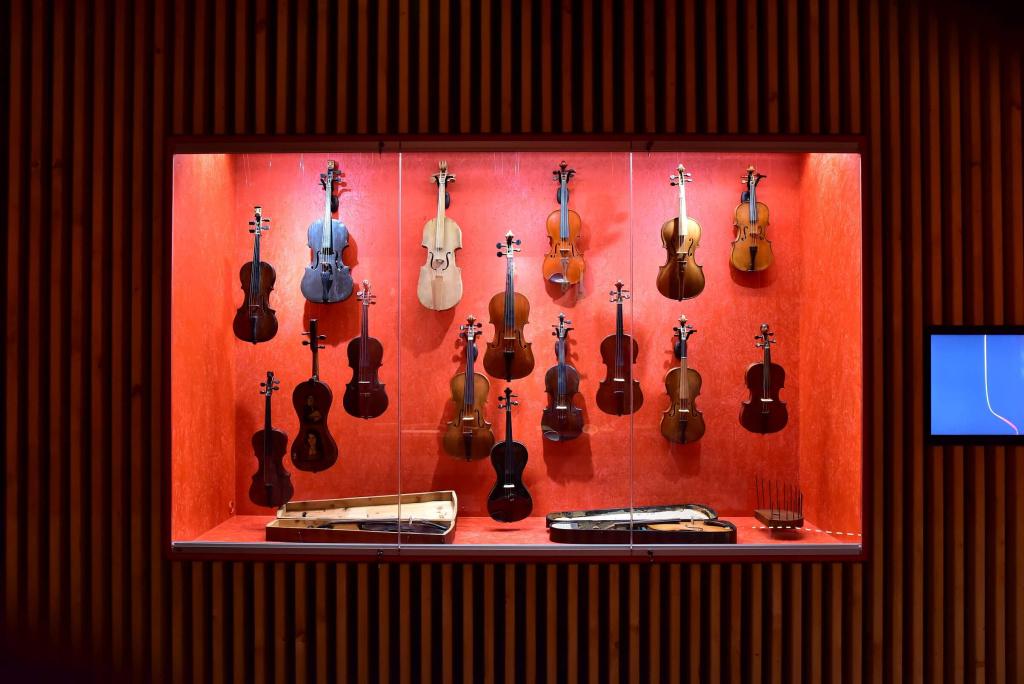
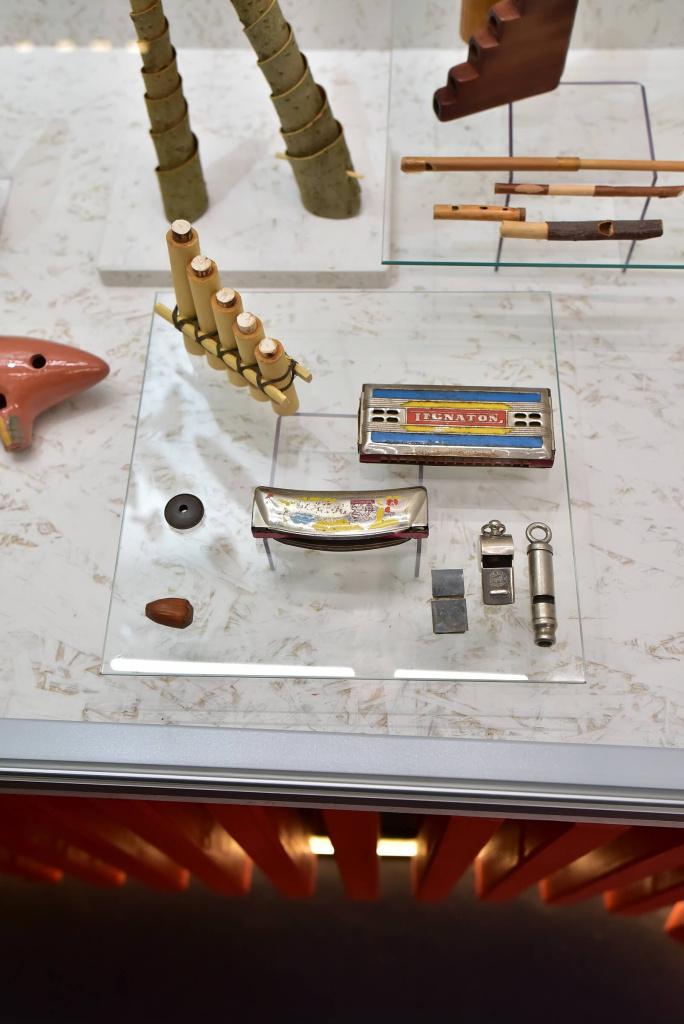
The exhibition “Musical Instruments in Folk Music” highlights these remarkable qualities of musical instruments, which have gained unique originality and individuality thanks to traditional craftsmen. In one place, you will see many remarkable and rare exhibits. Gradually, you will move through separate acoustic spaces where individual instruments will be presented. Your senses will feel as if you are walking through the instruments, allowing you to experience their simplified shapes and characteristic materials. Through modern technology and audiovisual interactive elements, you will also become part of the exhibition.
Integrated Regional Operational Programme (IROP), Specific Objective 3.1, Call No. 21 Project Number: CZ.06.3.33/0.0/0.0/16_026/0001705 The IROP projects are financially supported by the EU.
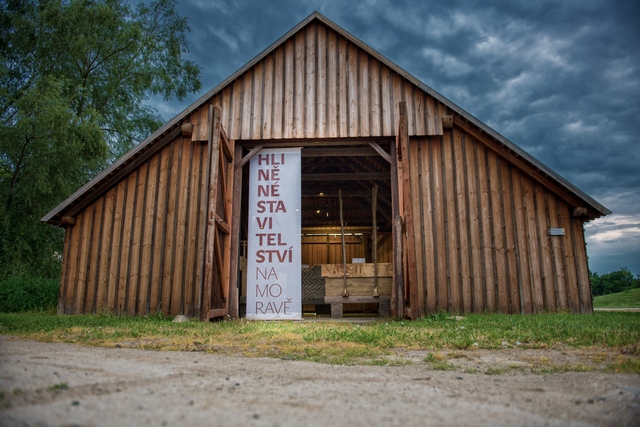
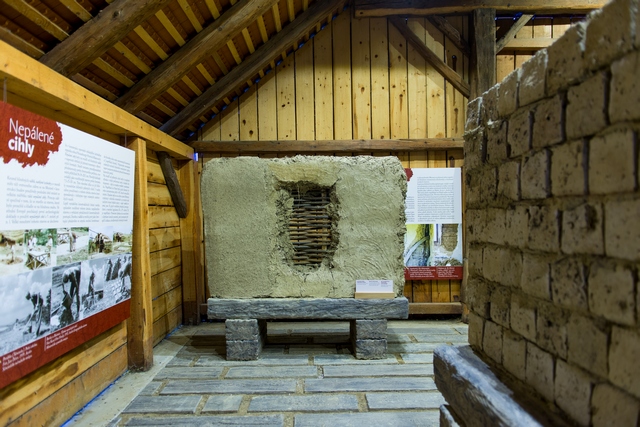
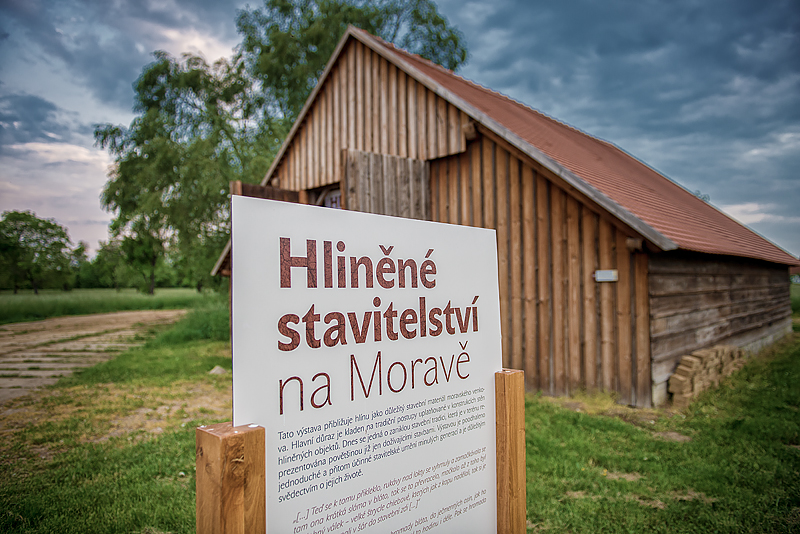
The exhibition “Earth Architecture in Moravia” is one of the outcomes of the applied research and development of national and cultural identity (NAKI), under the title “Technology of Traditional Clay Construction in Moravia and Its Relationship to the Central Danube Region.” This project, funded by the Ministry of Culture of the Czech Republic from 2011 to 2015, was led by the National Institute of Folk Culture in collaboration with Masaryk University.
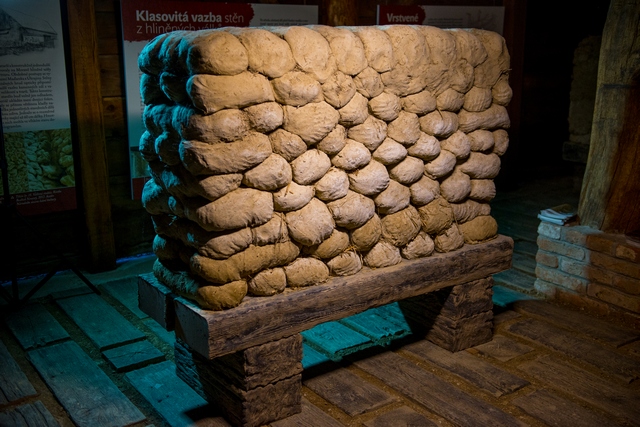
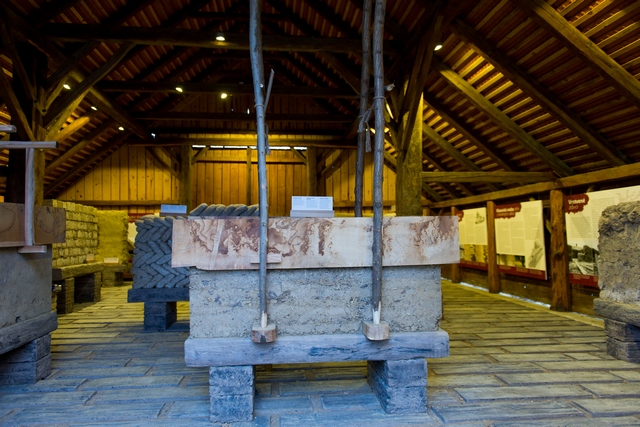
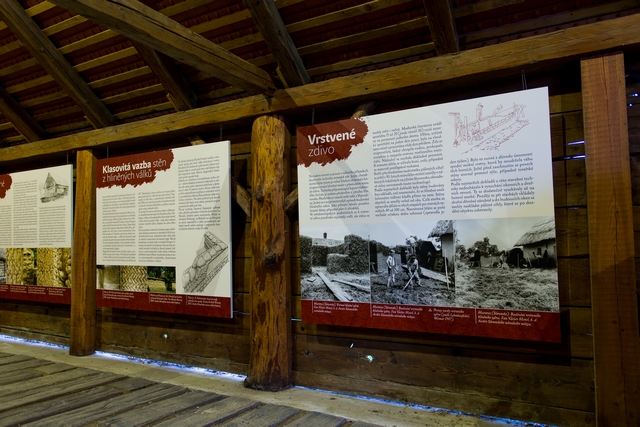
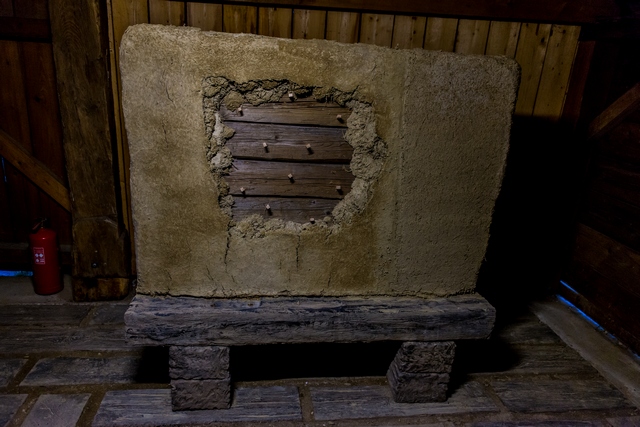
The ongoing research focused on a thorough analysis, practical mastery, and revitalization of construction techniques previously used in Moravia, specifically in the context of the so-called Pannonian type of folk house, which was typical for the alluvial regions in its central and southern parts. Clay construction is the most endangered group of historical rural architecture and serves as a significant testimony to the lives of past generations. The exhibition showcases a wide range of archaic construction solutions for the walls of clay structures. Nine exhibits capture this disappearing construction tradition, which is today represented in the field by only a fraction of structures, most of which are in their final stages of existence. This is an important part of the material culture of the rural population, which has not yet been comprehensively studied in ethnological research.
During the research, new findings emerged, which attribute an exceptional position to Moravia in the field of traditional clay construction. In addition to construction techniques described primarily in foreign literature, a building method was discovered for which no analogy has yet been found.
The basic ethnological research was newly combined with some archaeological methods. Given the project’s theme, several construction and structural experiments were conducted. It has been shown that this approach could become a method of ethnology in the future, not only in the field of construction.
The exhibition is open during the visitor season and as part of programs at the open-air museum.